There is a massive voter deletion exercise in West Bengal ahead of the 2026 Assembly elections, resulting in the removal of approximately 91 lakh names. Reports highlight that these purges are heavily concentrated in minority strongholds and traditional Trinamool Congress (TMC) bastions, sparking allegations of political targeting. While Hindu voters were removed in higher absolute numbers, the data suggests that Muslim and Dalit communities were disproportionately affected relative to their population shares. Furthermore, in 44 constituencies, the number of disenfranchised individuals actually exceeds the 2021 winning margins, potentially shifting future electoral outcomes. Human interest accounts reveal that the Special Intensive Revision (SIR) process has caused significant hardship, leaving long-term residents and elderly refugees struggling to prove their citizenship. Critics and legal experts have questioned the judicial adjudication process, citing restricted access to tribunals and a lack of transparency in the rapid removal of millions from the rolls.
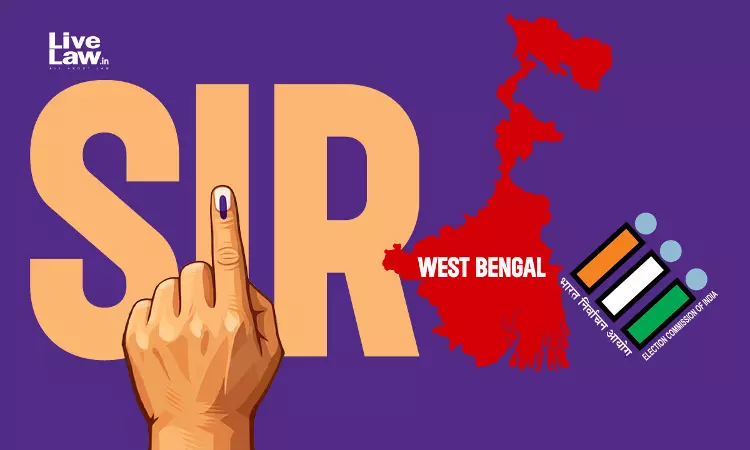
What is SIR
The EIC started this exercise to clean up electoral rolls by removing duplicate, migrated, and deceased voters. It was also intended to identify ‘illegal immigrants.’ So far, it has been carried out in 13 states and union territories. In West Bengal, however, terms such as ‘adjudication,’ ‘logical discrepancies,’ and ‘voter tribunals’ have emerged.
Bengal’s electoral rolls during the course of the special intensive revision (SIR) process, disproportionately higher than their share of the State’s population.
A comparison of booth level data before and after the SIR shows that 57.47 lakh, or 63% of the deleted voters are Hindus, while 31.1 lakh or 34% are Muslims. This figure assumes significance because Muslims accounted for only 27% of the State’s population as per the last census in 2011. In absolute terms, however, Hindus account for the largest number of deletions.
Except for the Bharatiya Janata Party (BJP), all political parties in West Bengal had opposed the SIR. The BJP, however, insisted that the process was a drive to sanitise the electoral rolls and remove “illegal infiltrators” from Bangladesh.
Mamata alleges BJP deleted 90 lakh names, warns of party's fall, accuses Shah of intimidation
High deletions in Matua-dominated seats The data on exclusions now show that Hindus faced high deletion rates in certain border constituencies where the majority of the electorate are Matuas. These Matuas are a sect of Hindu namasudras, a Dalit community, who migrated from Bangladesh in large numbers and are being promised citizenship by the BJP under the Citizenship Amendment Act.
For instance, in the Bagda Assembly seat in North 24 Parganas district, 50,230 voters were deleted, of which 46,826 are Hindus, and 3,264 are Muslims. At the Bongaon Uttar Assembly seat in the same district, 42,164 voters have been deleted, including 37,101 Hindus and 4,310 Muslims.
In the Bhabanipur Assembly segment, there were 50,987 deletion, of which 37,227 are Hindus and 12,084 are Muslims. In certain districts of the Jangalmahal region where the population of Muslims is low, Hindus account for almost 90% of the deletions. In Jhargram, about 94% of the electorate excluded from the electoral rolls are Hindus. They account for 91% of deletions in Bankura, and 88% of deletions in Purulia as well.
Election Commission-Trinamool Congress meeting ends on an acrimonious note
More deletion of Muslims during adjudication While 63 lakh voters were dropped from the draft rolls published by the ECI on February 28, another 60 lakh faced adjudication by judicial officers. Of these, 27 lakh electors were excluded on April 6, taking the total number of deletions to over 90 lakh. Of those deleted during the adjudication process, the highest numbers were in Muslim-dominated districts.
Murshidabad, the district with the highest percentage of Muslims in the State, also recorded the highest deletions of electors under adjudication, with over 4.55 lakhs excluded from the 11.01 lakh names which went for judicial scrutiny. North 24 Parganas saw the deletion of 3.25 lakh electors during the adjudication process, followed by Malda, another Muslim-dominated district, with 2.39 lakh deletions.
In terms of voters deleted during adjudication, there were more deletions among Muslim voters than Hindus in constituencies such as Bhabanipur and Nandigram.
With just two weeks left for polling to begin, the West Bengal electorate stands at 6.75 crore voters, significantly lower than the 7.66 crore voters on the rolls before the SIR began in October 2025, as well as the 7.34 crore voters eligible to vote
Geographic Patterns and Political Stakes
The purge is not evenly distributed across the state. More than half of the deletions are concentrated in just five districts: Murshidabad (4.55 lakh), North 24 Parganas (3.25 lakh), Malda (2.39 lakh), South 24 Parganas (2.22 lakh), and Purba Bardhaman (2.09 lakh).
The political implications are staggering. An analysis shows that in 44 Assembly constituencies, the number of deleted voters exceeds the winning margin from the 2021 elections. These critical seats are almost equally split between the TMC (24 seats) and the BJP (20 seats). For instance:
- In Samserganj, 74,775 voters were deleted, whereas the 2021 winning margin was only 26,111.
- In Nandigram, where the 2021 margin was a mere 1,736 votes, 3,461 voters have been found ineligible.
The Human Cost and Legal Hurdles
The SIR process—monitored by the Supreme Court and involving 700 judicial officers—required voters to re-establish their eligibility, often through rigorous documentation. This has led to the disenfranchisement of long-term residents, including Subarna Bala Poddar, a 97-year-old Partition refugee who has voted in every election since 1947 but was struck off due to a spelling discrepancy. Similarly, S Asraful Haque, a retired teacher who presided over 12 elections, was deleted despite possessing ancestral land records from 1944.
The appeal process has proven arduous. With all 19 appellate tribunals located in Kolkata, rural voters from distant districts like Malda and Murshidabad must travel hundreds of kilometers to prove their citizenship. The stress of the process has already turned tragic; in Ranaghat, a man named Jibankrishna Biswas collapsed and died while waiting in line to appeal the deletion of his and his daughter's names.
Political War of Words
Chief Minister Mamata Banerjee has labelled the exercise a "conspiracy" by the BJP to grab power by "detecting, deleting, and deporting" legitimate voters. Conversely, the BJP has defended the SIR as a necessary drive to "sanitize" the rolls and remove "illegal infiltrators" from Bangladesh.
As the state heads to the polls on April 23 and 29, the legitimacy of the electoral rolls remains a central point of contention, with the Supreme Court still hearing challenges to the freezing of the lists